
A medida que el tiempo se vuelve más cálido y seco, todos los residentes del centro-norte de Washington saben que la temporada de incendios está a la vuelta de la esquina, junto con su desafortunado compañero: el humo de los incendios forestales. Dado que ha aumentado tanto el número de incendios como la intensidad del humo —procedente tanto de incendios locales como de otros más lejanos—, diversos departamentos y equipos de Confluence Health han estado trabajando para atender a la comunidad y ayudar a mitigar los efectos sobre la salud.
«Dado que los incendios forestales son cada vez más frecuentes en el centro-norte de Washington, es importante que nos preparemos para los efectos conocidos del humo de los incendios forestales sobre la salud», comentó la Dra. Bindu Nayak, endocrinóloga y codirectora médica de equidad sanitaria en Confluence Health.
Ante el aumento de la incidencia de incendios forestales, la Asociación Médica Americana (AMA) solicitó recientemente al Dr. Nayak y a su colega de Confluence Health, la Dra. Saba Lodhi, especialista en neumología, que colaboraran en un artículo sobre el cambio climático, su impacto en los incendios y el humo, y cómo el público puede cuidar mejor de su salud. El artículo formaba parte de una serie titulada «Lo que los médicos desearían que los pacientes supieran», cuyo objetivo es ofrecer un espacio en el que los médicos compartan lo que quieren que los pacientes comprendan sobre los temas de actualidad en el ámbito sanitario.
En el artículo, el Dr. Lodhi explicó que el impacto en la salud pública se manifiesta «de dos formas principales: al alterar la gravedad de los problemas de salud existentes y al generar nuevos problemas de salud imprevistos». Los cambios de temperatura, junto con la contaminación del aire y del agua, pueden tener efectos negativos en la salud pública al aumentar las enfermedades relacionadas con el calor y las enfermedades cardiovasculares, e incluso la transmisión de enfermedades infecciosas. Un aspecto que suscita especial preocupación, lo cual no sorprende a nadie que haya intentado respirar en días especialmente llenos de humo, es el impacto en los pulmones.
«La exposición a estas partículas [procedentes del humo de los incendios forestales] aumenta el número de hospitalizaciones por problemas respiratorios y cardiovasculares, las visitas a consultas y servicios de urgencias, y la prescripción de medicamentos para el asma y la EPOC», añadió el Dr. Lodhi.
«Los niños son más sensibles a los efectos del humo de los incendios forestales, y los niños con asma constituyen uno de los grupos más vulnerables en lo que respecta a la exposición a dicho humo», prosiguió el Dr. Nayak. «A partir de los datos de nuestro hospital, observamos que los niños hispanos con asma de nuestra comunidad se vieron afectados por un mayor número de visitas al servicio de urgencias debido a problemas respiratorios durante la temporada de incendios forestales. Sabemos que abordar las desigualdades en materia de salud de forma proactiva puede ser de gran ayuda».
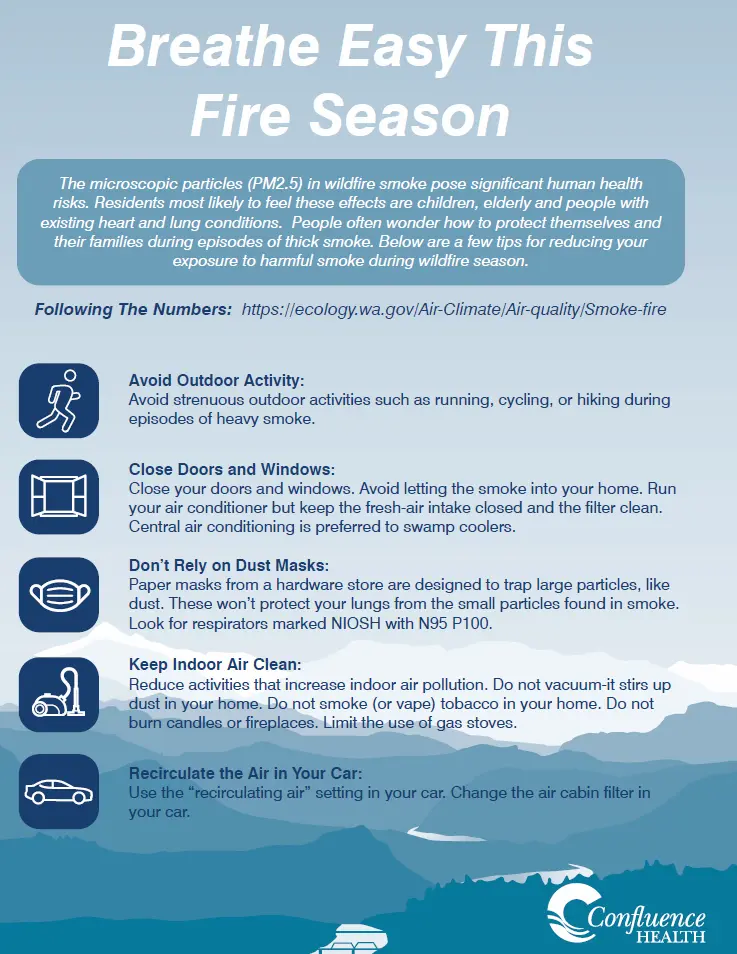
«El humo de los incendios forestales puede ser muy peligroso, especialmente para los niños, las personas mayores y quienes padecen enfermedades pulmonares», señaló Jill Gustafson, coordinadora de casos pediátricos ambulatorios en Confluence Health y otra de las participantes en el proyecto en curso. «Hay formas de prepararse con antelación para minimizar y controlar sus efectos negativos sobre la salud de su familia. Uno de los pasos más importantes es ponerse en contacto con la consulta de su médico para concertar una cita con el fin de revisar y controlar su salud pulmonar antes de que le afecte una enfermedad o el humo. Sea proactivo. Usted puede controlar su asma, ¡así que no deje que ella le controle a usted!».
Artículos relacionados
Encuentra a tu proveedor especializado
Explora nuestra red completa de médicos, especialistas y equipos de atención; filtra por servicio, idioma, ubicación y seguro para encontrar la opción que mejor se adapte a tus necesidades.